
Doomscrolling at Night: Why the News Loop Feels Hard to Stop
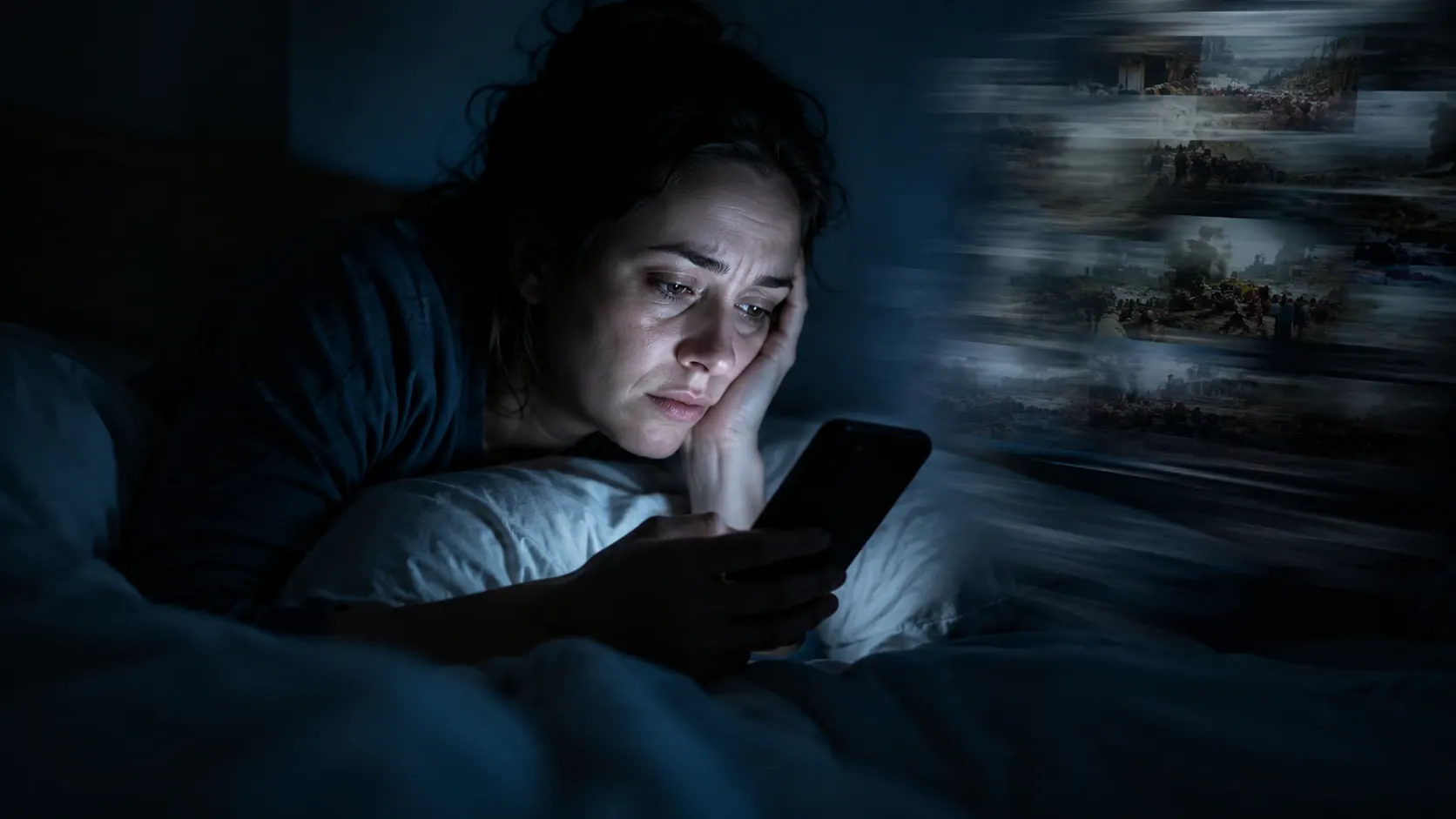
Why does a person keep reading bad news when the news is clearly making them feel worse? That is the strange question behind doomscrolling. The body is tired. The room is dark. The next morning is getting closer. The person knows they should stop. Still, the thumb moves. One more headline. One more comment. One more update. One more terrible thing that somehow feels necessary to know before sleep.
Doomscrolling has been studied as a real distress pattern, not just a bad personality habit; NIH-hosted research on doomscrolling connects the loop with anxiety, sleep disruption, and low motivation.
Doomscrolling is not only curiosity. It is often anxiety trying to become prepared. The brain sees threat and says, keep watching. Maybe the next article will explain it. Maybe the next update will make it feel controllable. Maybe if you know enough, you will not be caught off guard. But the feed rarely gives closure. It gives another open door.
The news loop rewards alarm without resolving it
The modern news feed is built for movement. Stories update, arguments grow, clips spread, and comments multiply. Even when the information is real, the delivery can keep the mind on alert. The brain receives the emotional signal of danger, but the body is lying in bed with nowhere to put that energy. No action follows. No problem gets solved. The alarm keeps ringing inside a motionless body.
That mismatch is what makes nighttime doomscrolling especially rough. During the day, a person can absorb stress and keep moving. At night, the phone can pull world problems into the most vulnerable part of the day. The bed becomes a command center for disasters the person cannot fix from a pillow. Staying informed turns into staying activated.
That is why the ending routine matters: NHLBI sleep-deficiency guidance treats sleep loss as a real health issue, not just a rough night.
The fear is real, but the method is costly
Telling someone to just stop caring is not helpful. People doomscroll because they care, worry, want to understand, or feel responsible. The issue is not caring. The issue is the method. If the only way you stay informed is by letting an endless feed decide when your mind is finished, the feed becomes the manager of your attention.
A healthier relationship with news needs edges. Choose a time. Choose a source. Choose an ending. The ending matters most. Without an ending, the brain keeps searching for certainty in a system designed to keep updating. A ten-minute news check in the afternoon is different from a midnight spiral in bed. Same world. Different boundary.
Replace the last scroll with a closing signal
The final ten minutes before sleep should not be treated like spare garbage time. That little window can train the body either toward rest or toward threat. A closing signal can be simple: charge the phone across the room, read something slow, write tomorrow’s first task on paper, stretch, listen to calm audio, or dim the room and let the day lose speed. The replacement does not need to be exciting. In fact, boring is part of the medicine.
If the urge to check news feels strong, write down the question you want answered and promise to check it at a specific time tomorrow. That move respects the concern without surrendering the night. It tells the brain, this matters, but not right now. Right now the job is recovery.
Ending the Night Before the Feed Does
Doomscrolling begins to loosen when the phone loses the right to decide when you are done. Set the edge before the fear starts negotiating. One time window. One cutoff. One calmer closing ritual. That is how a person starts taking the night back without having to stop caring about the world.
Staying informed should not require handing your bedroom to the news feed. You can care about the world and still decide that midnight is not the hour for every headline, argument, clip, and comment to move into your last thoughts of the day. There is a difference between knowing what is happening and letting every update decide how your night ends.