
The Work-Break Screen Trap: When Rest Becomes Another Drain
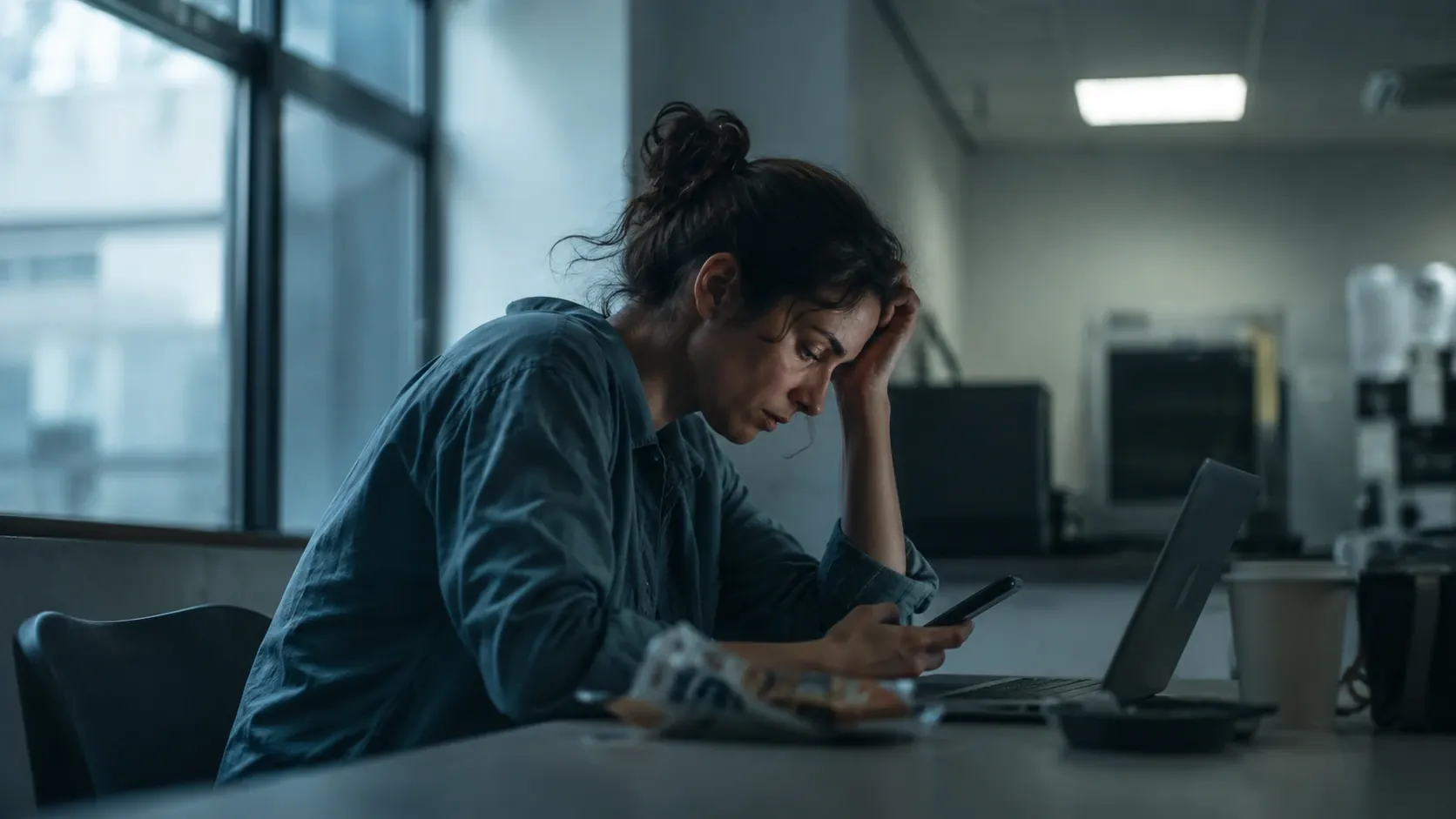
The work break is supposed to feel like a small island in the middle of the day. You sit down, open your lunch, maybe lean back for a minute, and let the pressure drop. But for a lot of people, the break has quietly turned into a second shift. The body stops working, but the eyes keep working. The thumb keeps moving. The mind keeps absorbing headlines, messages, arguments, videos, comments, prices, alerts, and little pieces of everybody else’s life.
The break stops working when it keeps the body in work-mode; CDC/NIOSH describes job stress as pressure that rises when demands do not match a worker’s resources or needs.
Then the break ends and something strange happens. You technically rested, but you do not feel restored. You feel more scattered. The body had ten minutes away from the job, but the brain never got ten minutes away from input. That is the work-break screen trap. It looks like recovery from the outside, but inside it can become another drain on attention.
The myth: scrolling is the easiest rest
The phone feels like rest because it asks for almost no physical effort. No planning, no conversation, no equipment, no decision beyond the next swipe. That is why it becomes the default during a break. The nervous system wants relief, and the phone offers immediate novelty. A new image, a new headline, a new joke, a new problem, a new thing to react to. It is tiny stimulation served fast.
The problem is that easy access is not the same as recovery. Many screen breaks keep the brain in scanning mode. You are looking for something interesting, something alarming, something funny, something useful, something that makes the next few minutes feel less boring. That search can keep attention tense. Instead of leaving work pressure for calm, the mind leaves work pressure for digital pressure.
If the screen break leaves you more drained than rested, MedlinePlus fatigue guidance gives that tired feeling a physical frame instead of turning it into a character flaw.
The reality: attention needs blank space
A real break gives the brain fewer demands for a few minutes. It does not have to be meditation. It can be eating without scrolling, walking outside, staring at a tree, listening to one song, breathing in the car, stretching your hands, or doing absolutely nothing for two minutes without treating boredom like an emergency. The point is not to become anti-phone. The point is to notice whether the phone is actually helping your break do its job.
Modern life trains people to feel uncomfortable with empty space. Silence can feel like wasted time. Standing in line without checking the phone can feel almost wrong. But the brain often repairs itself in those boring little gaps. When every gap gets filled with a feed, the day has no soft edges. Work presses on one side, digital noise presses on the other, and the person wonders why they feel tired even when they had breaks.
A better break has a beginning and an ending
One way to escape the trap is to give the break a shape. For the first two minutes, no phone. Eat, breathe, drink water, or just let your eyes look farther than a screen. After that, decide on purpose. Maybe you still check messages. Maybe you watch one short video. Maybe you read one thing. But the difference is that the phone does not get to automatically own the entire break before you even notice.
A shaped break also has an ending. If the screen is part of the break, use a timer or a rule that closes the loop. One song. One message check. One article. Five minutes. Without an ending, the phone is designed to keep asking for just a little more. A good break should send you back with slightly more steadiness, not with the weird feeling that your attention got picked up and shaken.
A Break That Gives Attention Back
The screen trap begins losing power when every empty minute no longer has to be filled. Sometimes the most useful thing you can do during a break is let the brain have nothing to chase. That is not laziness. It is maintenance, and maintenance is what lets the next part of the day feel less scattered.
You do not need to swear off your phone at work. That usually turns the issue into a fight, and fights are hard to keep up when you are tired. Start with one pocket of the day that belongs to your eyes, your food, and your breathing instead of the feed. The first half of lunch. The walk from the break room to the bathroom. The first three minutes in the car before driving home. A break does not need to be dramatic to be real.